Belonging to a think tank has its advantages, among which are stimulating conversation. This morning some of my "junta" and I were discussing teen dating habits (all present are parents). The topic wandered to the matter of "Pro-Choice" or "Pro-Life." Particularly apropos this election season.
Before I continue, allow me to say that, because I am a man, I shouldn't even have a say in this matter. Let's let women decide what is best for women. I would be happy to abide by their decision.
Seriously. Men should butt out.
Sadly, many men choose to butt in. So, I'll share my views.
The problem is that, as is often the case, the two sides rarely even address the other's concern. To some of us, the issue is a woman's basic human right to control her own body. Rarely does the question of right-or-wrong in ending an embryo or fetus's life come into the conversation. The other side talks about the embryo or fetus's right to be born, and ignores the woman in whose body it is growing.
The thing is, women will get abortions regardless of the law. If McCain is elected and the Supreme Court overturns Roe vs Wade, those who can afford it will fly to Canada or Europe to have their abortions done safely; or if the law allows and the family doctor is also a friend, as in my grandmother's case in the late 1930's, her doctor will claim that the woman is mentally unfit to keep the baby; he will then provide a legal abortion close to home. Those woman who do not have the connections or the money will opt for a back-alley coat-hanger abortion, or perhaps carry the child to term and leave it in a dumpster. This is the Law of Unintended Consequences; as with all laws of nature, there is no legislating it away.
Since Bill Clinton took office, the proponents of choice have at least said, as Obama so masterfully put it last night, that we should all be able to agree that we should have fewer unwanted pregnancies in the first place. This places him in the center. Now McCain has to choose to join him there, thus making this a non-issue in the election, or stay on the far right.
As with many Americans, I would like to see an end to abortion - through prior birth control - rather than through legislating away a woman's right to privacy and choice.
There is indeed a way for us all to win in this divisive issue. If only we had the wisdom to listen to what our opponents have to say about the matter.
Friday, August 29, 2008

Thursday, August 7, 2008
Hiroshima, August 7, 1945
On this day in 1945, we dropped the first of two atom bombs on Japan. World War II ended days later.
My friend and co-founder of The Naples Institute, Jim Fisher, shared a piece about this event from his memoir-as-novel, In The Shadow of The Courthouse. He was a child at the time, and questioned the jubilation of the adults around him as they heard of this bombing of civilians.
My immediate reaction to any perceived criticism of the atom-bombing of Japan in 1945 is quite visceral. My blood began to boil as I started reading Jim's missive. There are some truths the defense of which I take as a defense of all I hold dear: the sanctity of our Constitution, the righteousness of the Union in the Civil War, the treason of the Confederacy, its leaders, and its entire population in the same, the need for Good nations to act swiftly and decisively to protect the weak from genocide, as in the Balkans in the 90's or Darfur today, and the bombing of Japan in 1945 among them. The fact that there are those among us who question my positions triggers the "fight" part of my fight-or-flight animal response in a way that rarely happens in other situations. After all, I am an adult, and in most other cases I can control my baser emotions, such as rage or jealousy.
I have taught English to hundreds of adult Japanese students, and the fact that they look upon themselves as innocent victims in the bombings of Hiroshima and Nagasaki appalls me. To this day, Japanese school children are not taught of the horrors of the Rape of Nanking, the Bataan Death March, the Korean "Comfort Women," or any of the many other atrocities perpetrated by their citizen-soldiers. They have no idea that their military equipped hundreds of thousands of women and children with hedge-clippers and garden rakes to combat the invading Americans; that all of them were expected to fight to the death for their emperor. Indeed, they are taught in school that the US was the aggressor in WWII because we cut them off from oil and rubber imports - why is never mentioned - and their nation would have crumbled had they not "defended" themselves. This travesty is akin to German Holocaust denial, but on an intentional cultural-wide scale.
The bombing of Japan is all the more important to me because of my own father's experience. He turned 18 in November 1944, and signed up for service that same day. He went through basic training to head off to Europe, but had an operation that kept him stateside. His buddies sent him letters from the front. When he had finally recovered, he was redirected to prepare for the invasion of Japan instead. He knew very well that he likely would have been among those estimated hundreds of thousands or one million American servicemen expected to die in the case of an invasion of the Japanese home islands. In all probability, I write this blog entry only because Truman ordered bombs dropped on Japan.
...But it has always bothered me that we chose cities rather than military targets. I haven't got an answer for why that was okay. And so, as I read Jim's piece, I ordered myself to simmer down and let his words sink in. They didn't change my mind about how we ended the war, but they did reinforce my belief that we erred morally in choosing civilian targets.
As always, your thoughts are warmly accepted: ted@naplessocialaction.org
My friend and co-founder of The Naples Institute, Jim Fisher, shared a piece about this event from his memoir-as-novel, In The Shadow of The Courthouse. He was a child at the time, and questioned the jubilation of the adults around him as they heard of this bombing of civilians.
My immediate reaction to any perceived criticism of the atom-bombing of Japan in 1945 is quite visceral. My blood began to boil as I started reading Jim's missive. There are some truths the defense of which I take as a defense of all I hold dear: the sanctity of our Constitution, the righteousness of the Union in the Civil War, the treason of the Confederacy, its leaders, and its entire population in the same, the need for Good nations to act swiftly and decisively to protect the weak from genocide, as in the Balkans in the 90's or Darfur today, and the bombing of Japan in 1945 among them. The fact that there are those among us who question my positions triggers the "fight" part of my fight-or-flight animal response in a way that rarely happens in other situations. After all, I am an adult, and in most other cases I can control my baser emotions, such as rage or jealousy.
I have taught English to hundreds of adult Japanese students, and the fact that they look upon themselves as innocent victims in the bombings of Hiroshima and Nagasaki appalls me. To this day, Japanese school children are not taught of the horrors of the Rape of Nanking, the Bataan Death March, the Korean "Comfort Women," or any of the many other atrocities perpetrated by their citizen-soldiers. They have no idea that their military equipped hundreds of thousands of women and children with hedge-clippers and garden rakes to combat the invading Americans; that all of them were expected to fight to the death for their emperor. Indeed, they are taught in school that the US was the aggressor in WWII because we cut them off from oil and rubber imports - why is never mentioned - and their nation would have crumbled had they not "defended" themselves. This travesty is akin to German Holocaust denial, but on an intentional cultural-wide scale.
The bombing of Japan is all the more important to me because of my own father's experience. He turned 18 in November 1944, and signed up for service that same day. He went through basic training to head off to Europe, but had an operation that kept him stateside. His buddies sent him letters from the front. When he had finally recovered, he was redirected to prepare for the invasion of Japan instead. He knew very well that he likely would have been among those estimated hundreds of thousands or one million American servicemen expected to die in the case of an invasion of the Japanese home islands. In all probability, I write this blog entry only because Truman ordered bombs dropped on Japan.
...But it has always bothered me that we chose cities rather than military targets. I haven't got an answer for why that was okay. And so, as I read Jim's piece, I ordered myself to simmer down and let his words sink in. They didn't change my mind about how we ended the war, but they did reinforce my belief that we erred morally in choosing civilian targets.
As always, your thoughts are warmly accepted: ted@naplessocialaction.org
Tuesday, August 5, 2008
"Co-opetition"
I have a new favorite term from my friend Lois Bolin, Ph.D., co-founder of Naples Backyard History (www.naplesbackyardhistory.org). Instead of "competition," organizations in the citizen sector are wise to practice "co-opetition." I love it!
I'll tell you, the caliber of people Jane and I have fallen in with since moving to Naples is mind-boggling. (And no, it isn't because a friend came up with a catchy term.)
Building on the concept of co-opetition...
Everything Jane, Michael, and I have done with Naples Social Action.org over the past 1.5 years has been to bring the citizen sector together. We've encountered a lot of push-back from folks stuck in the old-fashioned paradigm, but rather than butt our heads against the wall of these human obstacles, we try instead to just move our attention to those who have a more enlightened view.
I see this "Us versus Them" attitude as akin to jealousy and/or mistrust - and you know what they say about mistrust:
Those who do not trust others are probably not trustworthy themselves.
My view of cooperation is that we in the citizen sector aren't fighting over donors and dollars. The actual fight is to get a potential donor to open his wallet in the first place. As the largest study of its kind from Indiana U. showed, people of high net worth who donate at all always do so to multiple causes - so the term "my donor" is nothing more than flagrant ignorance.
Lois and I both come from a business background, so this accountability concept (and its practice) is easy for us. Through The Naples Institute, we're creating an Ashoka Support Network here in Naples. Ashoka (www.ashoka.org) is committed to tearing down the artificial, imaginary gap between "nonprofits" and "for-profits." We're actually all on a continuum, with straight-out charities on one end, profit-only corporations on the other, and plenty of organizations all in between. We all have to operate by the same rules of accountability and results, though, in order to run well. Sadly, many in the citizen sector have no understanding of this - or no education in it.
...For that matter, many in the "for-profit" realm don't get it, either. What is a consultant gonna do?
I'll tell you, the caliber of people Jane and I have fallen in with since moving to Naples is mind-boggling. (And no, it isn't because a friend came up with a catchy term.)
Building on the concept of co-opetition...
Everything Jane, Michael, and I have done with Naples Social Action.org over the past 1.5 years has been to bring the citizen sector together. We've encountered a lot of push-back from folks stuck in the old-fashioned paradigm, but rather than butt our heads against the wall of these human obstacles, we try instead to just move our attention to those who have a more enlightened view.
I see this "Us versus Them" attitude as akin to jealousy and/or mistrust - and you know what they say about mistrust:
Those who do not trust others are probably not trustworthy themselves.
My view of cooperation is that we in the citizen sector aren't fighting over donors and dollars. The actual fight is to get a potential donor to open his wallet in the first place. As the largest study of its kind from Indiana U. showed, people of high net worth who donate at all always do so to multiple causes - so the term "my donor" is nothing more than flagrant ignorance.
Lois and I both come from a business background, so this accountability concept (and its practice) is easy for us. Through The Naples Institute, we're creating an Ashoka Support Network here in Naples. Ashoka (www.ashoka.org) is committed to tearing down the artificial, imaginary gap between "nonprofits" and "for-profits." We're actually all on a continuum, with straight-out charities on one end, profit-only corporations on the other, and plenty of organizations all in between. We all have to operate by the same rules of accountability and results, though, in order to run well. Sadly, many in the citizen sector have no understanding of this - or no education in it.
...For that matter, many in the "for-profit" realm don't get it, either. What is a consultant gonna do?
Wednesday, July 30, 2008
Laptop South Florida
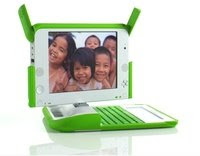
Laptop South Florida (LSF) is the name of the organization we are forming to bring OLPC laptop computers and our own unique* teacher-training to the children of Immokalee this summer. The pilot is going strong, under the guidance of Naples Social Action - especially of Jane, who is lead teacher and acting executive director of LSF.
I suppose if Jane is acting executive director, that makes me acting chairman of the board - even though we haven't officially named a board yet, I have gathered 11 folks to be on it.
In filing for our 501(c)(3) status with the IRS, I had to produce a budget. I sat down and came up with a $2.9 million plan, mostly for teacher-trainer pay and to cover the cost of laptops. There is minimal administrative and overhead built into it, mostly in the form of fundraising and marketing: it takes money to make money, even (or especially?) in the citizen sector.
$2.9 million may seem like a lot of money, but our plan is to give computers and training to tens of thousands of kids in South Florida over the next few years. If you look at the money this community generates for charity each year, it's a drop in the bucket. The Philharmonic Center for the Arts ("The Phil"), for instance, is said to have a $90 million endowment. Art is important for a community, absolutely. But not nearly as vital as education. These children we're working with are the artists, museum curators, and wealthy philanthropists of the future. They'll be our doctors, lawyers, inventors, political and business leaders.
Or we can leave them as they are, and half of these wonderful, brilliant, inspired children won't graduate from high school. Some will join gangs and deal drugs. Others will get pregnant at 16. Two or three million dollars isn't such a huge amount when viewed from that perspective, is it? We should actually set our sights much higher - but this will do for a start.
*I have resigned from the board of the Waveplace Foundation, for reasons of my own. True, Waveplace taught our teachers how to use software called Squeek eToys, which we are using in the Immokalee pilot. We are grateful for their help, and they have been paid for providing it.
I call our training unique, though, because it became apparent early on that Waveplace training, while adequate for the teachers, was not geared toward 8- and 9-year-olds. Our teachers had to completely recreate the training course for these children. What they have done in this summer program uses eToys, yes. But it is dramatically different from - and far improved over - the course that Waveplace created.
Squeek and eToys are both open-source, Linux-based, software programs. Waveplace did not invent them, and because they're open source, everyone in the world "owns" them. It's one of those commie Internet things that I don't fully understand, but that I do enjoy.
I suppose if Jane is acting executive director, that makes me acting chairman of the board - even though we haven't officially named a board yet, I have gathered 11 folks to be on it.
In filing for our 501(c)(3) status with the IRS, I had to produce a budget. I sat down and came up with a $2.9 million plan, mostly for teacher-trainer pay and to cover the cost of laptops. There is minimal administrative and overhead built into it, mostly in the form of fundraising and marketing: it takes money to make money, even (or especially?) in the citizen sector.
$2.9 million may seem like a lot of money, but our plan is to give computers and training to tens of thousands of kids in South Florida over the next few years. If you look at the money this community generates for charity each year, it's a drop in the bucket. The Philharmonic Center for the Arts ("The Phil"), for instance, is said to have a $90 million endowment. Art is important for a community, absolutely. But not nearly as vital as education. These children we're working with are the artists, museum curators, and wealthy philanthropists of the future. They'll be our doctors, lawyers, inventors, political and business leaders.
Or we can leave them as they are, and half of these wonderful, brilliant, inspired children won't graduate from high school. Some will join gangs and deal drugs. Others will get pregnant at 16. Two or three million dollars isn't such a huge amount when viewed from that perspective, is it? We should actually set our sights much higher - but this will do for a start.
*I have resigned from the board of the Waveplace Foundation, for reasons of my own. True, Waveplace taught our teachers how to use software called Squeek eToys, which we are using in the Immokalee pilot. We are grateful for their help, and they have been paid for providing it.
I call our training unique, though, because it became apparent early on that Waveplace training, while adequate for the teachers, was not geared toward 8- and 9-year-olds. Our teachers had to completely recreate the training course for these children. What they have done in this summer program uses eToys, yes. But it is dramatically different from - and far improved over - the course that Waveplace created.
Squeek and eToys are both open-source, Linux-based, software programs. Waveplace did not invent them, and because they're open source, everyone in the world "owns" them. It's one of those commie Internet things that I don't fully understand, but that I do enjoy.
Friday, July 25, 2008
Property Tax Break vs. High Property Values. You can't have both.
Scenario: You sell real estate, you own real estate you'd like to sell, you're a developer who'd like to sell homes, or you run the local Chamber of Commerce and want to help the local economy, which has been in a deep slump lately.
Question: Should you support Florida Constitutional Amendment 5, which will eliminate the state property tax (which is devoted to public education), or should you oppose it and try to keep the tax?
Answer: If you are short-sighted and look at property values from a very narrow perspective, vote for the constitutional change. This logic holds that people will be more likely to buy homes in Florida if there is no property tax. More buyers, of course, equals a tighter market, which equals higher prices.
If you understand economics in general and property values in particular, vote against Amendment 5 and keep the property tax. Why? Because the #1 influence on the value of a home is the quality of the local public schools.
Better schools = higher property values. That's more money in your pocket, plain and simple.
Amendment 5 claims to "replace" the tax revenue generated by property taxes with revenue from elsewhere - probably a 1% increase on the state sales tax. Experts report that the result would actually be a $9 billion shortfall. This isn't merely changing where the money comes from. It's going to bring in less money, and our schools - and home values - will suffer accordingly.
Why should affluent senior citizens care? Poor schools = low-wage jobs = high crime.
I have gotten active in the all-important drive to bring high-wage jobs to Southwest Florida. I'm senior partner in a new venture fund (http://www.niavg.com/) which is dedicated to exactly that, so my money is literally right where my mouth is. Why? Because higher-wage jobs will transform our economy, thus taking pressure off of the social-service nonprofits Naples Social Action works so hard to help. We'll have fewer "working poor," a term I find obscene - if you work an honest week, you shouldn't be poor come Friday!
The thing is, the first question a high-wage employer asks before opening up shop in an area is, "How well-educated is the workforce?" The first question a potential high-wage/high-skill employee asks before relocating to an area is, "Will my children get the kind of education that a parent like me demands?" If the answer to either of these is No, then guess who ain't moving to Southwest Florida? And guess what that means for our property values?
"Common sense is the rarest of commodities," as a sage once said. So too with understanding of economics. Please, don't get bamboozled by people who themselves aren't very bright. If someone tries selling you on Amendment 5, remember the swampland scams that Florida used to be famous for, and back away - quickly.
Your wealth depends on it.
Question: Should you support Florida Constitutional Amendment 5, which will eliminate the state property tax (which is devoted to public education), or should you oppose it and try to keep the tax?
Answer: If you are short-sighted and look at property values from a very narrow perspective, vote for the constitutional change. This logic holds that people will be more likely to buy homes in Florida if there is no property tax. More buyers, of course, equals a tighter market, which equals higher prices.
If you understand economics in general and property values in particular, vote against Amendment 5 and keep the property tax. Why? Because the #1 influence on the value of a home is the quality of the local public schools.
Better schools = higher property values. That's more money in your pocket, plain and simple.
Amendment 5 claims to "replace" the tax revenue generated by property taxes with revenue from elsewhere - probably a 1% increase on the state sales tax. Experts report that the result would actually be a $9 billion shortfall. This isn't merely changing where the money comes from. It's going to bring in less money, and our schools - and home values - will suffer accordingly.
Why should affluent senior citizens care? Poor schools = low-wage jobs = high crime.
I have gotten active in the all-important drive to bring high-wage jobs to Southwest Florida. I'm senior partner in a new venture fund (http://www.niavg.com/) which is dedicated to exactly that, so my money is literally right where my mouth is. Why? Because higher-wage jobs will transform our economy, thus taking pressure off of the social-service nonprofits Naples Social Action works so hard to help. We'll have fewer "working poor," a term I find obscene - if you work an honest week, you shouldn't be poor come Friday!
The thing is, the first question a high-wage employer asks before opening up shop in an area is, "How well-educated is the workforce?" The first question a potential high-wage/high-skill employee asks before relocating to an area is, "Will my children get the kind of education that a parent like me demands?" If the answer to either of these is No, then guess who ain't moving to Southwest Florida? And guess what that means for our property values?
"Common sense is the rarest of commodities," as a sage once said. So too with understanding of economics. Please, don't get bamboozled by people who themselves aren't very bright. If someone tries selling you on Amendment 5, remember the swampland scams that Florida used to be famous for, and back away - quickly.
Your wealth depends on it.
School Vouchers: Here we go again!
Following are excerpts from a June, 2005 article on the previous effort to destroy the Florida public school system and the US Constitutional decree for the separation of church and state. The good guys won that round because of the Florida constitution.
The result? Jeb Bush and his right-wing zealot cronies are now attempting to re-write the Florida constitution, apparently believing that if you don't like losing the game, change the rules. Even worse, they are using misleading language in two ballot initiatives (7 & 9) to do it - so even if one ammendment fails, the other may make it past duped voters.
From June, 2005:
...in a case that will determine whether the state can continue diverting much-needed tax dollars from neighborhood public schools to private, mostly church-run schools.
In November 2004, the First District Court of Appeal ruled that the Florida Opportunity Scholarship Program represented a scheme by which government funds were used to support religious institutions, in violation of Florida's 137-year-old Constitutional prohibition specifically barring aid to religious institutions. The appeals court upheld two earlier decisions striking down vouchers that were issued by a three-judge panel of the same court and by the Leon County Circuit Court.
"What is at stake in this case is one of the very essential founding principles of our government - that no one should be forced through the tax system to finance religious institutions whose beliefs they may not share," said attorney Ron Meyer, who is serving as co-counsel in the lawsuit. "Of course, it is profoundly important that parents have the right to send their children, at their own expense, to schools of their choice, including schools that share their religious values. However, taxpayers should not be forced to finance religious institutions with which they do not agree."
For the whole story: http://www.aclu.org/religion/govtfunding/16266prs20050606.html
The result? Jeb Bush and his right-wing zealot cronies are now attempting to re-write the Florida constitution, apparently believing that if you don't like losing the game, change the rules. Even worse, they are using misleading language in two ballot initiatives (7 & 9) to do it - so even if one ammendment fails, the other may make it past duped voters.
From June, 2005:
...in a case that will determine whether the state can continue diverting much-needed tax dollars from neighborhood public schools to private, mostly church-run schools.
In November 2004, the First District Court of Appeal ruled that the Florida Opportunity Scholarship Program represented a scheme by which government funds were used to support religious institutions, in violation of Florida's 137-year-old Constitutional prohibition specifically barring aid to religious institutions. The appeals court upheld two earlier decisions striking down vouchers that were issued by a three-judge panel of the same court and by the Leon County Circuit Court.
"What is at stake in this case is one of the very essential founding principles of our government - that no one should be forced through the tax system to finance religious institutions whose beliefs they may not share," said attorney Ron Meyer, who is serving as co-counsel in the lawsuit. "Of course, it is profoundly important that parents have the right to send their children, at their own expense, to schools of their choice, including schools that share their religious values. However, taxpayers should not be forced to finance religious institutions with which they do not agree."
For the whole story: http://www.aclu.org/religion/govtfunding/16266prs20050606.html
Tuesday, July 22, 2008
Midnight Basketball
As I've mentioned on my previous blog, I'm friends with a diverse number of individuals, some of whom are way to the left of me, others even farther to the right (to be fair, I'm not as centrist as I used to be). A number of us, the leadership group of CFI Naples, carry on a wide-ranging email conversation at all times - there are roughly a score of us, six or seven of whom weigh in regularly on whatever the topic of the hour happens to be.
The most recent exchange related to "cradle-to-grave" socialism versus corporate welfare. One member of our group said that when the government helps a company, the stockholders (you and me, if we choose) benefit. He then went on to say, "How do you invest in Midnight Basketball?" What follows is my reply:
The way we invest in Midnight Basketball is by paying taxes or, as I'd much prefer, giving money to charity.* Our return on investment is when the kids involved don't carjack us; instead, some of them will go to college and one of the companies you mentioned will hire them to invent a breakthrough product that will make our lives better and bring the stockholders a nice fat profit.
*What I'm trying to have a little, tiny influence over through my nonprofit efforts is to increase the total dollar amount that individuals and corporations donate. With sufficient funds from the private sector, there would be no need for the government to provide most social services. Not only can the citizen ("nonprofit") sector often operate more efficiently than the government, but by choosing where we'd like our money to go, we are applying the strength of the market to said programs. If people want to invest in midnight basketball or food stamps, they can. If they'd rather invest in Junior Achievement and cancer research, then they can do that instead.
The most recent exchange related to "cradle-to-grave" socialism versus corporate welfare. One member of our group said that when the government helps a company, the stockholders (you and me, if we choose) benefit. He then went on to say, "How do you invest in Midnight Basketball?" What follows is my reply:
The way we invest in Midnight Basketball is by paying taxes or, as I'd much prefer, giving money to charity.* Our return on investment is when the kids involved don't carjack us; instead, some of them will go to college and one of the companies you mentioned will hire them to invent a breakthrough product that will make our lives better and bring the stockholders a nice fat profit.
*What I'm trying to have a little, tiny influence over through my nonprofit efforts is to increase the total dollar amount that individuals and corporations donate. With sufficient funds from the private sector, there would be no need for the government to provide most social services. Not only can the citizen ("nonprofit") sector often operate more efficiently than the government, but by choosing where we'd like our money to go, we are applying the strength of the market to said programs. If people want to invest in midnight basketball or food stamps, they can. If they'd rather invest in Junior Achievement and cancer research, then they can do that instead.
Subscribe to:
Posts (Atom)